The Friend of the Bridegroom

JohnBapThey [John’s disciples] came to John, and said to him, “Rabbi, he who was with you beyond the Jordan, to whom you have testified, behold, the same baptizes, and everyone is coming to him.” John answered, “A man can receive nothing, unless it has been given him from heaven. You yourselves testify that I said, ‘I am not the Christ,’ but, ‘I have been sent before him.’ He who has the bride is the bridegroom; but the friend of the bridegroom, who stands and hears him, rejoices greatly because of the bridegroom’s voice. This, my joy, therefore is made full. He must increase, but I must decrease. He who comes from above is above all.” (John 3:25-36
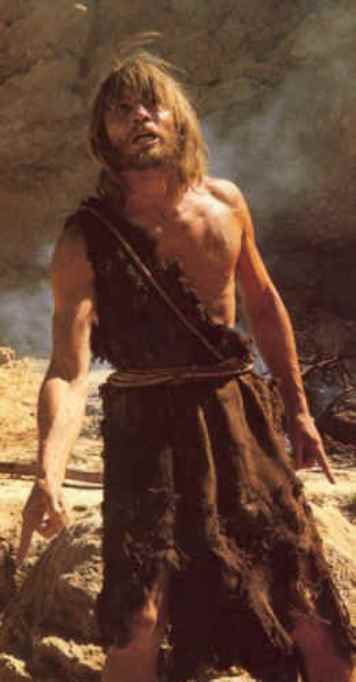
John the Baptist was the ideal messenger and forerunner of Jesus Christ as his words in this passage reveal. John was not all about John, but he was  a man devoted to pointing to Jesus Christ. His faithfulness is nothing short of inspirational. His famous words, “He [Jesus] must increase, but I must decrease” were descriptive of his single passion, the spirit in which he came. Do we really know what these words mean? Do we know it on the level that John did? This is John’s mission statement. It was his goal from the outset. It never entered his mind to establish and maintain a high-profile ministry or following. When asked by the religious Jews who he was he simply answered “[I am] the voice of one crying in the wilderness, Prepare you the way of the Lord…” He found his identity in Christ, not in his calling and ministry. He didn’t even call himself, “Prophet John.” From the shores of the Jordan, where he first saw the One whose shoelaces he was not worthy to unloose, John never stopped heralding, he never stopped pointing; he never stopped directing the eyes and hearts of the hearers to Jesus. He never stopped saying, “Behold the Lamb of God!”

But the time came for John to decrease even further. His job was done and he saw the need to disappear. He had prepared the way for Jesus and now it was time for him to make way for the Bridegroom. He knew that if he stayed he would find himself in competition with Jesus. How many of us are willing to decrease? Isn’t it the carnal will of every man to leave a legacy?

John’s followers had not yet left him and gone after Jesus, and now they were tempting him. Their words were filled with jealousy against Christ. “He who was with you beyond the Jordan, to whom you have testified, behold, He is baptizing, and all are coming to Him!” They wanted John to get with the program; to compete with the very one he was called to serve. Couldn’t John see that his ministry was failing? That people were no longer coming to him? Perhaps they were attempting to get John to hold more meetings, to do what had worked for him in the past. Get up! Do something! Can’t you see that all are coming to Him?

Today in the blogosphere we would say, “Post more blog articles and keep your name in front of the people and the search engines alerted to your presence!” Oh, how aware many of us are about how many followers we have. Many bloggers will go out and click “likes” on hundreds of other blog articles without even reading them in order to get others to come to their sites and boost their stats. If we are about pointing God’s people to Christ and not to ourselves, should our stats be a motivation for our actions and our writing? Shouldn’t we be waiting on the Lord and the voice of His Spirit to tell us what He wants written? I can tell you that if you do, you can count on being led down a path where you decrease and Christ increases.

John’s reply to his followers is teeming with significance. He reminded his disciples that “a man can receive nothing unless it has been given to him from heaven.” John did acknowledge that he had (past tense) been sent before Christ, but that time was over. John reminded his disciples what his ministry was all about when he said, “He who has the bride is the bridegroom.” In the context of the traditional Hebrew wedding ceremony, John saw himself as the friend of the bridegroom, who helped in any way he could to present the bride unmolested, as a chaste virgin, to the Groom.

The final act of the friend of the bridegroom was on that long awaited night when the groom came to steal the bride away. When she heard the cry, “The bridegroom comes, go out to meet him,” she was swept away to the house that the Groom had been long preparing.

According to the Jewish tradition, the friend of the bridegroom followed the wedding procession at a distance. When the groom took the bride into the bridal chamber, the friend of the bridegroom drew near. Standing just outside the bridal suite, he listened to the sound of lovemaking and at the first note of joy in the Bridegroom’s voice, the friend of the Bridegroom danced and shouted for joy. His job over, the groom’s friend turned and walked away for the marriage was consummated and his calling was fulfilled.

So we see in John a perfect messenger with a perfect heart. May God help us to be such friends and messengers of the Bridegroom today and walk away from any clamoring after our own gain under the guise of ministry!

(Note: I would like to give credit to my good brother in Christ, George Davis, for having much of the original inspiration for this article. To read all of the original essay we wrote together go to: http://www.awildernessvoice.com/ElijahCompany.html )

Rightly Discerning the Body of Christ

Aduterous woman and Jesus 2

What right do you have to criticize someone else’s servants? Only their Lord can decide if they are doing right, and the Lord will make sure that they do right. (Romans 14:4 CEV)

What an amazing verse this is! Here Paul wrote that only God has the right to decide whether one of His saints is doing as they should and not only that, He has the power to put them back on the right path. There are many people in the church today who want to take this right into their own hands and speak out against anyone that is not toeing the line as they think should be done.

Another form of judging involves people who judge others in their hearts but do not verbalize it. They think they are okay because of their silence. Yet, the scripture says that as a man thinks in his heart, so is he. God hears our thoughts and knows our hearts. Do you still think you are doing just fine when it comes to judging? Well, listen to your thoughts the next time you are driving in heavy traffic. Paul wrote,

“For by the grace given to me I bid every one among you not to think of himself more highly than he ought to think, but to think with sober judgment, each according to the measure of faith which God has assigned him.” (Romans 12:3 RSVA)

Thinking of ourselves as God sees us is a rare thing. We usually think of our spiritual estate as better than it is. Not many of us see ourselves according to the measure of faith that God has given us. Satan is the accuser of the brethren of Christ. Often we find our thoughts agreeing with him as if we are the one who has the right to judge, taking the place of God to ourselves! Funny, but this is exactly what Lucifer did (see Isaiah 14:12-15).

Have you ever noticed that Jesus never went around claiming that He was the Messiah? Even when pressed by the Jewish leaders to say so, He seemed to avoid taking the title to Himself. Instead He let men tell Him what He was while they observed His actions and words (see Matthew 16:16). The title does not make the man, and neither do his degrees. On the other hand, Jesus did take the title “the son of man.” There was nothing special about being “the son of a man.” We read that when He found Himself in the form of a man, He became a lowly servant, not a Prince in a palace or a High Priest. As he grew in Christ the titles Paul the apostle claimed diminished until finally he called himself, “the offscouring of the world” (1 Corinthians 4:13). When we rightfully compare ourselves to Christ, the Father’s Standard of righteousness, it should humble us as it did Paul.

Jesus took the lowest place His whole life. He was born in a barn, and laid in a feed trough in the least of all towns in Judea. He grew up in a town in Galilee that was considered least by the Jewish leaders of that day. Referring to Him they said, “Can any good thing come out of Nazareth?” He spent most of His life in what was called “Galilee of the Gentiles,” disdained by the Jews. He was loved by the common people, but was rejected by the leaders of His own people. Finally, he was tried like a common criminal, crucified between two thieves and His body placed in a borrowed grave. If being born in the right family and having a place of respect in the local community was an asset for gaining power and respectability, somebody forgot to tell God.

We often have this “uppity” attitude toward one another as if we think we are something when we are really nothing. It is a dead give-away when we hear ourselves saying to another saint, “When I was a younger Christian like you I thought that way too.” “I know what you are going through.” “Here is what you need to do…” And the all time classic, “I feel your pain.” We are all too quick to put ourselves in a higher place in our thinking than the one we are “reaching out to in love” or speaking to. We are all too quick to try and do the convicting work of the Spirit of God in each others lives.

One of the subtle ways we elevate ourselves over others is by posturing. We do so by flaunting our experience, our titles, our degrees, even with our attitudes and body language. “Touch me not, for you are unclean!” “I am holier than thou.” We might not say this, but we often act it out and others can sense it. Yet, Jesus, who should be our example as Christians, allowed Himself to be touched by women who were bleeding, and unclean according to the Jewish law. He hung out with sinners and prostitutes and even touched lepers!

Jesus identified with the multitudes (Greek, ochlos by definition – the common people and the rabble) and was often found mingling with them. He was criticized for it by the Jewish leaders. How often we see people who love their titles and respectability keeping the common people at arm’s length or even further, but not our Lord. This attitude is not the Spirit of Christ. He did not have an appointment secretary who acted as if she went to guard dog school. But I am afraid this is all too common today among recognized church leaders. By looking to people such as these as an example, we take on the wrong attitude toward others. Like so many children, we learn more from what we observe in our leaders than by what they say.

In contrast we find Jesus rebuking His disciples for trying to keep women and their children away from Him. He said, “Suffer the little children to come unto me and forbid them not, for of such is the kingdom of heaven.” In short, Jesus was a servant to all and always accessible to the “little people,” even saying that they will fill His Father’s kingdom, not the elevated ones.

Saints, there is no substitute for the work of the cross and the excellent knowledge (intimate knowing) of Jesus Christ in our lives. There is no substitute for the unction of the Holy Spirit and the heavenly teaching that comes from Him as we open our hearts to God. Institutions can teach you the history of the church and details about the Bible, but they cannot give you the rhema word and moment by moment guidance of God. No, you must walk by faith in humility if you are to be an effective witness of God’s kingdom and love.

Remember that Paul had the best education the Jewish system could provide and he counted his history, bloodline and education, etc., as less than nothing, except for his intimate relationship (“excellent knowledge of”) with Jesus. Mark his words, “We know that we all have knowledge. Knowledge puffs up, but love edifies. And if anyone thinks that he knows anything, he knows nothing yet as he ought to know” (1 Corinthians 8:1-2, NKJV). It is not what we know that counts, but whether Jesus knows us and we intimately know Him (see Matthew 7:21-23). We cannot effectively teach what we have not become. As with John, “He must increase, but I must decrease” (John 3:30, NKJV). There is nothing more detracting in us from portraying Christ to the “lost world” than pride. And pride keeps us from becoming truly one with God and with each other as well.

When the Lord’s people get a new spiritual Holy Ghost revelation of the Sovereign Headship of Christ, and begin to hold fast the Head, they let go of everything that is local, and personal, and different, and scattered on the earth. That is the place to which to come for unity. We cannot be at variance with one another as the Lord’s children if Christ is absolute Sovereign Head in our lives. When the Lord Jesus gets the complete mastery as Head in our lives, then all independence of action, and life, and all self-will, self-direction, self-seeking, self-glory and self-vindication will go. These are the things which set us apart from one another. You pass from Isaiah [Isaiah 6:1-8], and as you do, so you remember that you have the results of such a vision seen in this man Isaiah. Such a vision immediately has the effect of humiliating him to the dust. Oh, yes, we lose all our pride, all our importance when once we see the Lord in glory. “Woe is me….” That is humiliation! Then, after humiliation, there is consecration: “Lo, this hath touched thy lips; and thine iniquity is taken away, and thy sin purged.” And, after humiliation and consecration, there comes vocation: “…who will go for Us?” “Then I said, Here am I; send me.” ~ T. Austin Sparks http://www.austin-sparks.net/english/books/001461.html

By What Are We to Compare Ourselves and Others?

justice-scalesWe men tend to be what is called “left brained.” And I am told that women tend to be “right brained.” Men tend to think logically and comparatively and they love rules and order while women think in terms of relationships and making them work with love and mercy. A man sets his perimeter around his home and looks outward where a woman focuses inside the perimeter and wants peace and love to prevail there. Of course there are always exceptions to the rule. Somebody pointed out that a man will say, “I think thus and so…” But a woman will say, “I feel thus and so…” One is calculated and the other is emotional. Is God one or the other or both? In Genesis we read that He created man in His own image, male and female made He them. So on the one hand we see the God of Truth and on the other He is the God of mercy. He is both!

Be merciful unto me, O God, be merciful unto me: for my soul trusts in you: yea, in the shadow of your wings will I make my refuge, until these calamities have passed. I will cry unto God most high; unto God who performs all things for me. He shall send from heaven, and save me from the reproach of him that would swallow me up. Selah. God shall send forth his mercy and his truth. (Psalms 57:1-3 KJ2000 – emphasis added)

Surely his salvation is near those that fear him; that glory may dwell in our land. Mercy and truth are met together; righteousness and peace have kissed each other. (Psalms 85:9-10 KJ2000 – emphasis added)

But with men and women it seems to be one or the other. All mercy or all truth. One old sage told me that the mercy and truth of God only meet in Christ, so when we are one or the other in our thinking, we lack Christ’s life in us. Remember that Jesus is the Way, the Truth and the Life and no man can come to the Father but by Him.

Here we have been making comparisons of men to women. What I want to point out is the folly of making comparisons in our relationships. I remember how shocked I was when my dear wife, Dorothy, reacted to a “compliment” from me in our first year of marriage. I simply said, “You sure look pretty… for a change.” She informed me that I gave her a nice compliment and then I took it away in the same sentence by qualifying it. My mother did that all the time. Her love was always conditional. “Michael, do (this or that) so we can be proud of you.” I have learned the hard way over the years (fifty with the same woman) that no woman likes her man to compare her to herself or to other women. Men, to be safe, just don’t do it because they will hear it wrong no matter how you butter it up.

Paul had something to say about making comparisons among ourselves, as well,

We do not dare to classify or compare ourselves with some who commend themselves. When they measure themselves by themselves and compare themselves with themselves, they are not wise. (2 Corinthians 10:12 NIV)

In Hebrews it is clear that there is only one measuring stick that we are to compare ourselves to–God’s own Son.

Therefore seeing we also are surrounded by so great a cloud of witnesses, let us lay aside every weight, and the sin which does so easily beset us, and let us run with patience the race that is set before us, Looking unto Jesus the author and finisher of our faith; who for the joy that was set before him endured the cross, despising the shame, and is set down at the right hand of the throne of God. For consider him that endured such contradiction of sinners against himself, lest you be wearied and faint in your minds. You have not yet resisted unto blood, striving against sin. (Hebrews 12:1-4 KJVCNT – emphasis added)

When we think we are really doing quite well by comparing ourselves to another human or even to the way we used to be, what have we accomplished? The Bible says that Jesus is the First Born of many brethren, and when He appears we shall be like Him for we shall see Him as He is. We are to be looking to Jesus who is the Author and the Finisher of our faith, not our fellow man. Yet in our pride, we choose a lower standard so we look good in our own eyes and the eyes of others.

Another failing in us is the tendency to make another person our idol. Oswald Chambers wrote,

Refusing to be disillusioned is the cause of much of the suffering of human life. And this is how that suffering happens— if we love someone, but do not love God, we demand total perfection and righteousness from that person, and when we do not get it we become cruel and vindictive; yet we are demanding of a human being something which he or she cannot possibly give. There is only one Being who can completely satisfy to the absolute depth of the hurting human heart, and that is the Lord Jesus Christ.

(http://utmost.org/the-teaching-of-disillusionment/)

Does the love of God in us compare ourselves with others or their conduct with ours? I was thinking about what Paul said in 1 Corinthians 13.

Love is patient and kind; love is not jealous or boastful; it is not arrogant or rude. Love does not insist on its own way; it is not irritable or resentful; it does not rejoice at wrong, but rejoices in the right. Love bears all things, believes all things, hopes all things, endures all things. Love never ends… (1 Corinthians 13:4-8 RSVA)

So, to put it in the negative form for contrast — a lack of God’s love (actually a lack of Christ) in us makes us impatient, cruel, jealous, boastful, arrogant and rude when we are with others. We insist on getting our way and are irritable and resentful. We can’t wait until those we don’t like get theirs and rejoice when bad things happen to them. We find things that don’t go our way unbearable, we are filled with doubts and have little endurance in us. Our love for others fails as soon as they cross us.

In the verses above, we do not see a lot comparing going on in the love of God, but in the negative, more human form of it, we see lots of comparisons that have no grace or love toward others. That is the nature of the old man, Adam, that is in us. But with God there is hope because God is love.

But God, who is rich in mercy, for his great love with which he loved us, Even when we were dead in sins, has made us alive together with Christ, (by grace you are saved;) And has raised us up together, and made us sit together in heavenly places in Christ Jesus: That in the ages to come he might show the exceeding riches of his grace in his kindness toward us through Christ Jesus. For by grace are you saved through faith; and that not of yourselves: it is the gift of God: Not of works, lest any man should boast. For we are his workmanship, created in Christ Jesus unto good works, which God has before ordained that we should walk in them. (Ephesians 2:4-10 KJ2000)

In and of ourselves we are wretched and without hope, but in Christ we have great faith, hope and love. It is all a gift from Him. This transformation is totally by the working of God in us. When we have our eyes fixed on Jesus as the Author and the Finisher of our faith, we will not be looking at the failings of others or even at our own. Instead, we will be looking at “…whatever is true, whatever is honorable, whatever is just, whatever is pure, whatever is lovely, whatever is gracious, if there is any excellence, if there is anything worthy of praise, think about these things.” (Philippians 4:8 RSVA)

Great advice! (I want to thank Susanne Schuberth for her valuable input on this subject)

Are We to Apprehend God by Gaining Knowledge or Revelation?

Seminary GraduationBroken cistern2

Be appalled, O heavens, at this, be shocked, be utterly desolate, says the LORD, for my people have committed two evils: they have forsaken me, the fountain of living waters, and hewed out cisterns for themselves, broken cisterns, that can hold no water. (Jeremiah 2:12-13 RSVA)

One time I tried to engage a pastor in a heart to heart conversation. I said to him, “God has been giving me this revelation lately…” Upon hearing this, he interrupted me and said, “God no longer gives revelation! All revelation ceased with the closing of the canon of the Bible.” I didn’t ask him which of the eight plus canons he was referring to and on which date it was closed. Well, needless to say, that was the end of my attempt to speak from my heart with this man. After all, he had the degree hanging on his office wall to show he was right!

Austin Sparks wrote:

After the Cross, all the fullness of the Divine power was released upon the world through those who had been brought into absolute oneness with the Lord by that Cross… First, let us remember that this knowledge of God is by revelation. We can never get this knowledge of God merely by reading, by listening, by attending meetings…. You may understand it all by mental apprehension, know the terms and the verses, and use them – but what about the dynamic of this thing? What does our personal presence in a situation mean?… It is a most important question. Is this thing alive, or have we merely got a little more mental apprehension of it through conferences [and book learning]? Do we know God in this thing by reason of a personal inward revelation on the subject?

Secondly, it comes by the way of pain. You get a thing revealed to you as truth, perhaps something about the Cross of Christ, or victory over Satan, and you think you know it, and you say, “This is beautiful!” And you begin to talk about it, and it is not very long before something happens –- your circumstances are touched. Now you go down with this truth, down into the vortex of awful agony, right down to the gates of hell, your being is upheaved right from the very bottom, and all the time there is the question – “Will that truth hold good?” Is it going to work? And when you have got down as far as you can go, the flesh elements and the self elements have been dealt with, and you grimly hold on to the Lord in this matter of victory – then it comes out, you have tested it right to the very bottom of your being – that thing has become you, and then you can go to others in their grim conflict and their darkness, and say, “I know – I know this thing, and I know God is faithful, I know the victory.” You have got a mighty emphasis on your knowledge, it is a thing about which you have no doubt, because you have gone down into the depths with it, and proved it down there, and by the very pain the thing has been proved.

Gaining knowledge about something can be fun and stimulating. The thought of having a degree that says you are accomplished and have expertise in a subject and the monetary rewards that go with it keep a multi-billion industry called “education” going in western culture. But is this the education of the saints of God that is important to Him? When Jesus chose His disciples, He did not go to Jerusalem and seek graduates from the best rabbinical schools. Instead He chose His disciples from the unlearned of that nation.

Now when they saw the boldness of Peter and John, and perceived that they were unlearned and ordinary men, they marveled; and they took knowledge of them, that they had been with Jesus. (Acts 4:13 KJ2000)

What a pregnant verse this is! These men were not educated by other men, but they had spent time with Jesus. Just how much of what we write and speak to others is from hearts that have spent time with Jesus? With the advent of desktop publishing, websites and blogs, knowledge has been on the increase, but we can be “ever learning, and never able to come to the knowledge of the Truth.” The knowledge of the Truth only comes through an intimate relationship with the Truth, Jesus Christ. A man or woman can go off to Bible college or seminary and pass all the exams, parrot back what they were taught in the classes, receive a degree and be turned loose to rule over church congregations around the world and never have spent one minute being taught by the Spirit of Christ! In fact, they can take advanced training on how to “grow churches” and look like a total success by the numbers that they gather around them and not even have a relationship with the Father.

Is this the “rock” that Jesus was talking about building His church upon? No! It was the fact that Peter could hear the Father and give witness from his heart to what He heard without having received it from flesh and blood: “You are the Christ, the Son of the living God!”(See Matt. 16:16-17). The called-out ones of God (Greek – ekklesia – mistranslated “church”) are enlivened by the Spirit of God Who leads them into all truth or they are none of His (See John 3:3-7, John 16:13 and Romans 8:9).

I believe that these educational institutions that the church system relies upon for its leaders is what Jesus was warning about:

Truly, truly, I say to you, he who does not enter the sheepfold by the door but climbs in by another way, that man is a thief and a robber; but he who enters by the door is the shepherd of the sheep… This figure Jesus used with them, but they did not understand what he was saying to them. So Jesus again said to them, Truly, truly, I say to you, I am the door of the sheep. (John 10:1-7 RSVA – emphasis added)

Thieves! Robbers! Hirelings! The church systems are overrun with them and the people are clueless and unable to discern the voice of the Good Shepherd. Why? Because the whole system is based on scholarship instead of personal life-changing revelation from God. Are there pastors and church leaders that are born of the Spirit? Absolutely, but more and more we see men behind the pulpits that are more concerned with their wages (hirelings) and gaining a following than they are with pointing the people under them to the one Good Shepherd as their All in all. Knowledge puffs up, but the love of God edifies and that love comes from being in a close relationship with Jesus Christ.

Revelation from God has a price attached to it, a very personal price that will cost you everything and not very many want to pay it. As Sparks put it, “And when you have got down as far as you can go, the flesh elements and the self elements have been dealt with, and you grimly hold on to the Lord in this matter of victory – then it comes out, you have tested it right to the very bottom of your being – that thing has become you, and then you can go to others in their grim conflict and their darkness, and say, ‘I know – I know this thing, and I know God is faithful, I know the victory.’”

Dear Father, don’t let us settle for broken cisterns that can hold no water and forsake the Fountain of Living Water. Amen.

What is Spiritual Adultery?

I was involved in two different “moves of God” that took place–the Asbury Revival (from which the Jesus Movement came) and the Toronto Movement (from which came the Pensacola “Brownsville Revival,” and many other special meetings that people flocked to around the world.) I learned much from being involved in these two events. In the spring of 1970 the kids in the college chapel in Wilmore, Kentucky (Asbury Theological Seminary) had a special visitation from God. These kids spent hours and hours in prayer and they got filled with the Spirit on a Christian campus that was not Pentecostal! But it did not stay there. They went home on spring break with their fresh infilling and took the gospel to other young people they knew and it spread from there. Church buildings could not contain it. As a result, the Jesus movement took place in parks, on the streets and in coffee houses in the run down parts of towns. God was saving and filling these young people with the Spirit and they were taking the gospel back out into the highways and byways to the Hippy movement many of them came out of. Thousands were saved out of that “tune in, turn on and drop out” culture that was centered on drugs, sex and rock and roll. I was part of this move of the Spirit. It was an exciting time and was propelled by the Spirit of God… until men rose up, became the new “spiritual gurus,” and started building their own followings and denominations out of what God sovereignly started. That was “the day the music died.” As for Toronto, Brownsville, Rodney Howard Brown, Randy Clark, John Arnott, Todd Bentley, Bill Johnson, etc., I was in on the beginnings of that move too in the early 90’s because I did not want to miss “the next move of God.” The important difference between these two moves was that the people saved in the Jesus movement were not seeking after signs and wonders. They only wanted Jesus! But in the Toronto type meetings I went to, people came flocking to special buildings so that they could get a “special touch” from a guru who “had the power” and as a result many got manifestations in their bodies like “holy laughter,” “spiritual drunkenness,” crawling around on the floor while making animal noises, or shaking violently. Some women even made suggestive movements with their bodies as they danced. It was not God! Why? Paul warned us that this would happen before Christ returned.
“And then shall that Wicked One be revealed, whom the Lord shall consume with the breath of his mouth, and shall destroy with the brightness of his coming: Even him, whose coming is after the working of Satan with all power and signs and lying wonders, And with all deception of unrighteousness in them that perish; because they received not the love of the truth, that they might be saved.” (2 Thessalonians 2:8-10 KJ2000)

Yes, before Christ returns, Satan will be turned lose with “all power and signs.” This is not a time to be seeking signs and power! Many people that I knew who got these “special touches” in these meetings ended up with all kinds of emotional problems and mental disorders. What made the difference was whether they wanted Christ only, or they were looking for manifestations and power in their bodies! Jesus called seeking after signs spiritual adultery (see Matthew 12:38-40). Why? Because we go to mere men to get our signs and wonders preformed! Those Pharisees did not believe that Jesus was the Christ as they looked for a sign from Him. Clamoring after men and women instead of Christ as the Son of God is adultery in the eyes of God. Paul and the early apostles were quite emphatic that people did not do that to them. In Acts we read:

While he [the healed lame man] clung to Peter and John, all the people ran together to them in the portico called Solomon’s, astounded. And when Peter saw it he addressed the people, “Men of Israel, why do you wonder at this, or why do you stare at us, as though by our own power or piety we had made him walk? …And his [Jesus Christ] name, by faith in his name, has made this man strong whom you see and know; and the faith which is through Jesus has given the man this perfect health in the presence of you all. “And now, brethren, I know that you acted in ignorance, as did also your rulers…” (Acts 3:11-17 RSVA) He listened to Paul speaking; and Paul, looking intently at him and seeing that he had faith to be made well, said in a loud voice, “Stand upright on your feet.” And he sprang up and walked. And when the crowds saw what Paul had done, they lifted up their voices, saying in Lycao’nian, “The gods have come down to us in the likeness of men!” Barnabas they called Zeus, and Paul, because he was the chief speaker, they called Hermes. And the priest of Zeus, whose temple was in front of the city, brought oxen and garlands to the gates and wanted to offer sacrifice with the people. But when the apostles Barnabas and Paul heard of it, they tore their garments and rushed out among the multitude, crying, “Men, why are you doing this? We also are men, of like nature with you, and bring you good news, that you should turn from these vain things to a living God who made the heaven and the earth and the sea and all that is in them. (Acts 14:9-15 RSVA)

“The gods have come down to us in the likeness of men!” Boy is THAT a pregnant statement as to what is wrong with Christianity today! Paul warned the Corinthians about this very thing…

But I, brethren, could not address you as spiritual men, but as men of the flesh, as babes in Christ. I fed you with milk, not solid food; for you were not ready for it; and even yet you are not ready, for you are still of the flesh… For when one says, “I belong to Paul,” and another, “I belong to Apol’los,” are you not merely men? What then is Apol’los? What is Paul? Servants through whom you believed, as the Lord assigned to each. I planted, Apol’los watered, but God gave the growth. So neither he who plants nor he who waters is anything, but only God who gives the growth… So let no one boast of men. For all things are yours, whether Paul or Apol’los or Cephas or the world or life or death or the present or the future, all are yours; and you are Christ’s; and Christ is God’s.” (1 Corinthians 3:1-23 RSVA)

All things pertaining to God are ours in Christ, dear saints. Quit looking to men.

But without faith it is impossible to please him: for he that comes to God must believe that he is, and that he is a rewarder of them that diligently seek HIM. (Hebrews 11:6 KJ2000 – emphasis added)

Love Personified

By Michael Clark and Susanne Schuberth

woman-at-the-wellSusanne wrote in an earlier blog,

“I was just pondering on the fact why we as human beings are not always the same. I mean, there are people with whom we dare to be more open than with others. People of whom we know that they love us and that they will forgive us whatever we might say or do. But there are other people we do not know that intimately and therefore we are a still bit cautious of how to deal with them.” (https://enteringthepromisedland.wordpress.com/2014/12/08/be-who-you-are-since-there-is-no-other-you/)

There is something that the Samaritan woman at Jacob’s well felt about Jesus that made her dare to be totally open with Him. When we hear the story about her preached, many like to say that Jesus confronted her with her sins. Susanne and I hold that this was not the case, but rather she was confronted with how much Jesus loved and respected her in spite of knowing what her past history was. She was shocked that He was even talking with her and asked her for a drink, knowing that Jews did not have anything to do with Samaritans, much less a Jewish man with a Samaritan woman! She was the dog of dogs in the mind of an orthodox Jewish Rabbi.

Yet, Jesus personally shared the gospel with her, “If you knew the gift of God, and who it is that is saying to you, ‘Give me a drink,’ you would have asked him, and he would have given you living water” (John 4:10 RSVA). Jesus told her that He was the Gift of God and that as such He could give her the water of life that flows freely. “Whoever drinks of the water that I shall give him will never thirst; the water that I shall give him will become in him a spring of water welling up to eternal life” (John 4:14 RSVA). What is amazing is that she did not for one moment doubt His offer that He could give her living water and eternal life! She responded, “Sir, give me this water, that I may not thirst, nor come here to draw.” (John 4:15 RSVA). She wanted all that He had for her because she realized that she had met the lover of her soul, the first man in her life who was not interested in what she had to offer him, but who wanted to give her what she really needed. We know that this man was God, too. A human being can never fill the void in our hearts which were created by God to only be filled with His Spirit. His love is the only love that can make us whole again.

Jesus, after offering her eternal life and she wanting it, pointed out to her that she was living with a man who was not her husband. Yet, where was the condemnation? It was not there! Rather He commended her for telling the truth, “I have no husband.” This woman felt no shame or condemnation from Him, only love and respect. And what was her response to this divine encounter? She said to Him, “I know that Messiah is coming (he who is called Christ); when he comes, he will show us all things.” Jesus said to her, “I who speak to you am he. ” …So the woman left her water jar, and went away into the city, and said to the people, ‘Come, see a man who told me all that I ever did. Can this be the Christ?’” (John 4:25-29 RSVA). Jesus had shown her in a few words the very inner thoughts and longings of her heart. Messiah had come and showed her all things including that men would no longer worship God in special buildings or in special places, but that true worship would be done by God’s Spirit within them from lives filled with and demonstrating His truth.

“Come, see a man who told me all that I ever did!” I don’t know about you, but we believe that if this woman had been shamed by what Jesus said to her, would she be telling everyone she knows that there is a man down by the well that knows every sin she ever committed? No, she would be hiding out in her house, hoping He would go away and keep silent! But she ran into her village and rejoiced for having met the Christ. THAT IS THE GOSPEL. She met LOVE personified. He showed her compassion and understood WHY she had sought love in men and had been married five times before. But He did not condemn her in the slightest, but rather told her about where to find eternal life and what real worship of our heavenly Father is all about; therefore she trusted in Him.

All too often the gospel today is presented to people in one of two extremes. On the one hand people get the idea that they have to “clean up their act” before they can come to Christ. The other extreme is that we can be a Christian without ever having to change a thing, we can just go on living in sin with impunity. Neither is true. But we finally see that the love our Father has for us is not contingent on our performance, for He makes the sun to shine and the rain to fall of both the bad and the good. We love Him because He first loves us. What follows from that love relationship is a longing to please the One who loves us so much. We are given the Spirit of God who speaks in our hearts when He wants us to change and what it is that pleases Him and it is because of our love relationship with our Father that we are empowered to change. Love is the most powerful motivator known to man and GOD IS LOVE.

Is Our Time Always?

Jesus against the crowdDo you not believe that I am in the Father and the Father in me? The words that I say to you I do not speak on my own authority; but the Father who dwells in me does his works… Truly, truly, I say to you, he who believes in me will also do the works that I do; and greater works than these will he do, because I go to the Father. (John 14:10 &12 RSVA)

What could I mean by this by this title, “Is our time always?” When Jesus was with His brothers in Nazareth, one of the big annual feasts came up. Every devout Jew was required to attend it if he could. In the Gospel of John we read:

After this Jesus went about in Galilee; he would not go about in Judea, because the Jews sought to kill him. Now the Jews’ feast of Tabernacles was at hand. So his brothers said to him, “Leave here and go to Judea, that your disciples may see the works you are doing. For no man works in secret if he seeks to be known openly. If you do these things, show yourself to the world.” For even his brothers did not believe in him. Jesus said to them, “My time has not yet come, but your time is always here. The world cannot hate you, but it hates me because I testify of it that its works are evil. (John 7:1-7 RSVA)

Jesus’ very own brothers did not believe in Him. They were tempting Him to do the “reasonable” thing. “Hey, Jesus! Here is your big chance. Your disciples and all who believe in God will be at this feast in Jerusalem. Get on up there and do your miracles and blow their minds with your wisdom and Bible knowledge. Don’t you know that it pays to advertise? Location, location, location! What are you doing hanging around in this back-water town?” Weren’t they being reasonable according to the way most people think today? “Seize the moment! Go for the gusto!” To this Jesus replied, “Your time is always! You can come and go as you will, but I cannot.” T. Austin Sparks wrote,

You get to the heart of everything in the case of the Lord Jesus when you recognize that the one question which constituted the testing ground of His life was: “Will this Man act alone, speak alone, choose alone, decide alone, move alone?” And His answer was always, “Not out from Myself!” “The Son can do nothing out from Himself.” “The words that I speak unto you I speak not out from Myself.” Every kind of appeal was made to Him to persuade Him on the impulse of the moment, or in response to an entreaty that seemed to promise success, or by an argument that appeared to be the truest wisdom, to move, act, speak, do something as out from Himself….*

Jesus was tempted in this very same way by the devil during His 40 days of fasting in the wilderness.

Then the devil took him to the holy city, and set him on the pinnacle of the temple, and said to him, “If you are the Son of God, throw yourself down; for it is written, ‘He will give his angels charge of you,’ and ‘On their hands they will bear you up, lest you strike your foot against a stone.'” Jesus said to him, “Again it is written, ‘You shall not tempt the Lord your God.'” (Matthew 4:5-7 RSVA)

“Yes, Jesus, you are the Son of God, leap off the pinnacle of the temple in front of all the faithful worshipers in Jerusalem and His angels will catch you and you will float down to the ground like a feather. It will blow their minds and you will be able to prove to them and yourself that you are the Messiah! Think of the instant following you will get!” The devil often tempts us to do the “reasonable thing.” Acting on our own for the benefit of others without getting the direction of our Father seems like the reasonable thing to do. “God has given you this gift! Shouldn’t you use it to the max?” But have you asked Jesus what to do? Are not we His disciples? Did not He say to His disciples, “Apart from Me you can do nothing”? T. A. Sparks continues:

That ninety-nine people do a thing is no argument for the hundredth to do it. We are not to be led by the appeals that decide the actions of the many – “It is the popular thing! Everybody else is doing it! It is the recognized thing to do!” No! Does my Father want me to do this thing? That is the question that must ever rule our steps. In the case of the Lord Jesus there was all the time an underworking to get Him to adopt the contrary course, to act without inquiry of His Father, without direct leading from His Father; to act in His individual capacity as though He were His own Master, as though He had not to make appeal elsewhere… *

In the account of Jesus’ temptation by the devil in the wilderness, in Luke we read, “And when the devil had ended every temptation, he departed from him for a season.” (Luke 4:13 KJ2000). Have you ever wondered when the “season” of temptation resumed again? In Matthew we read:

From that time forth began Jesus to show unto his disciples, how that he must go unto Jerusalem, and suffer many things of the elders and chief priests and scribes, and be killed, and be raised again the third day. Then Peter took him, and began to rebuke him, saying, Be it far from you, Lord: this shall not be unto you. But he turned, and said unto Peter, Get you behind me, Satan: you are an offense unto me: for you consider not the things that be of God, but those that be of men. (Matthew 16:21-23 KJ2000)

Peter was appealing to Jesus to do the reasonable thing! “Spare yourself, Lord! Don’t go up to die in Jerusalem. Think of all the good you can still do here in Galilee! You have people here that believe in you and need you!” But once again we see Jesus only doing the works that His Father gave Him to do. He recognized the words of Satan in Peter’s mouth, tempting Him to not go to the cross as His Father had destined Him to do so that He could fulfill all righteousness. Sparks continues,

In Him there was none of that which was personal, [or] independent. We are not speaking merely of such things as are sinfully personal, positively personal, but simply of independent action, action taken for the best ends, for a good motive, with quite a proper intention. Yes, all this may be done, but apart from the positive word from the Father. That creates an independent thought, however good may be the motive.*

And it is our independence from God in our words and our actions that is the devil’s playground. Paul wrote:

But I say, walk by the Spirit, and do not gratify the desires of the flesh. For the desires of the flesh are against the Spirit, and the desires of the Spirit are against the flesh; for these are opposed to each other, to prevent you from doing what you would. (Galatians 5:16-17 RSVA)

Jesus said that if any one would be His disciple that they would have to take up their cross an follow Him. The cross in each of our lives that He gives us to carry is tailor made to put an end to our childish independence. When we were young in the Lord we ran out and did all kinds of “good works for Jesus.” But was our Father in them or did they come out from us as we tried to outguess God as to what His will for our lives would be? There is a death that must happen to that old foolish Adam in each one of us that seeks to maintain control even when doing “good works.” Old things must pass away and ALL things in us must become new. For this process to occur our Father wants to hear from our hearts just as Jesus prayed before they crucified Him, “Father, I would that this cup pass from me. But none the less, not my will, Father, but thine be done.” The cross He gives us to bare is our doorway into lives filled with His life giving Eternal Life. May we embrace it as an instrument of His Fatherly love for us. Amen.

* http://www.austin-sparks.net/english/books/002218.html

It’s Time, But Are We Ready to Follow?

Recently, Susanne Schuberth posted an article on her blog about the kingdom of God and how we enter it. She wrote,

We only need His power of love and the rest will fall into its place. It is so simple, the kingdom of God: First He makes us see it and later He lets us enter. Eventually, when we have entered the Kingdom of God, He teaches all of us so that we can stop teaching each other.”

(https://enteringthepromisedland.wordpress.com/2015/07/17/what-is-the-kingdom-of-god-about/)

As I read her words I was stunned at the simplicity of what she wrote. The photo at the head of the article was taken by her husband. She can see this church clock from her kitchen window in Germany. She calls it her “kitchen clock.” I was curious about the time he snapped the picture — 8:22. I felt led by the Lord to look up chapter 8, verse 22 in each of the four gospels and here is what I found:

 (St. Paul’s Church in Fürth, Photo by Paul Schuberth)

(St. Paul’s Church in Fürth, Photo by Paul Schuberth)


But Jesus said unto him, “Follow me; and let the dead bury their dead.” And when he was entered into a ship, his disciples followed him. (Matthew 8:22-23 KJ2000)

And he came to Bethsaida; and they brought a blind man unto him, and besought him to touch him. And he took the blind man by the hand, and led him out of the town… (Mark 8:22-23 KJ2000)

Now it came to pass on a certain day, that he went into a ship with his disciples: and he said unto them, “Let us go over to the other side of the lake”. And they launched forth. But as they sailed he fell asleep: and there came down a storm of wind on the lake; and they were filling up with water, and were in jeopardy. (Luke 8:22-23 KJ2000)

Then said the Jews, Will he kill himself? because he said, “Where I go, you cannot come. And he said unto them, You are from beneath; I am from above: you are of this world; I am not of this world.” (John 8:22-23 KJ2000)

I don’t believe there is a coincidence to anything when God is teaching and leading us. Susanne’s message was all about listening, obeying God’s voice and following Him in His kingdom. Isn’t it interesting that a random picture of a clock on a cathedral could be used by the Spirit to further the lesson she shared?

In these four passages we see divine movement and progress as people followed Christ, and stagnation and death when they did not. In the Matthew and Luke passages, we see Jesus telling the disciples to follow Him and leave their attachment to the world and even their natural families behind. So as a teaching point, He told them to enter a boat and launch out across a lake. And what happened when they obeyed? Everything went well, right? No, a great storm blew up and was about to sink their boat. Jesus was asleep on a cushion in the bottom of the boat as it was starting to fill with water, ignoring their plight! Sound familiar?

Even when we obey the Lord and try to follow Him wherever He leads us, it will not be an easy road. It can even become life threatening at times. There will be many extreme tests of faith required of us. But notice Jesus’ words to them, “Let us go over to the other side of the lake.” Jesus only spoke what He heard His Father saying. Father did not say, “Let us go out into the middle of the lake and drown!” He was in perfect peace that they were going to reach the other side of the lake because that is what His Father commanded. God does not require us to do anything that He does not also give us the grace to accomplish, but there is usually a test in the process of obeying His will.

The whole boat ride was a divine setup to teach these men faith. After they woke Him up with their cries, He rebuked the storm into a flat calm and asked, “Where is your faith?” If we dare to leave all and follow Jesus, we will have our faith stretched. When this has happened, how many of us have said, “Did I hear Him correctly? I thought that if I obeyed His voice everything would be fine! But now, look at the mess He let me get into! I am not so sure I want to follow Jesus after all!” It is here that many falter. The test is too great for the depth of their commitment and they turn back. A nice spiritual boat ride on a sunny day was all they signed up for. Remember the parable of the four kinds of ground?

In the Mark passage we see Jesus take a blind man and lead him out of town so He could heal him. Again we see movement where faith is concerned. Isn’t this a curious thing? Why did Jesus have to lead him out of town so he could be made to see? Couldn’t Jesus heal him right where He stood? After seeking spiritual light, how many of us have been required to leave our comfort zones where we knew our way around (at least by feel)? God does that. He will always stir up our comfortable little lives if we are serious about following Him (see Deu. 32:10-12). Some of us had messed up lives before we realized that He was after us. He led me from the Sunday church system to go with Him outside the camp and bear the reproach that would go with it. He later gave me this passage to explain what happened.

“We have an altar, of which they have no right to eat who serve the tabernacle… Therefore Jesus also, that he might sanctify the people with his own blood, suffered outside the gate. Let us go forth therefore unto him outside the camp, bearing his reproach.” (Hebrews 13:10-13 KJ2000)

He took me outside the camps of Christendom so He could teach me how to hear His voice and give me spiritual sight. As long as I was listening to preachers that were not inspired by the Spirit in what they taught, though it was all familiar, I would rarely hear His voice and what He specifically had to say to me.

Again we see movement here in these passages. God requires progress and obedience. There is a cost attached to it, but the reward is spiritual sight. He leads us to an altar that those who insist on being taught by men have no access to. But remember, it’s when we boast and say that we see that we are blind. Humility always goes with true spiritual insight.

And finally in John 8:22, Jesus tells the religious leaders and their followers that where He goes, they cannot follow. “…you are of this world; I am not of this world.” Jesus is not of this world (He did not say earth, for the earth is the Lord’s and the fullness thereof. He said the kosmos – the world system under Satan). They were of their father the devil and destined to do his works.

If we are of Christ, we are from above, we are His sheep and we will follow the Good Shepherd wherever He goes because He loves us and we love Him. We hear His voice and will not follow the voices of strangers. As Susanne said, He leads us with His love for us. His love will never take us away from His kingdom, but always deeper into it and His heart. His love for us, as it is proven true, will always make our faith and hope in Him grow. “So faith, hope, love abide, these three; but the greatest of these is love.” (1 Corinthians 13:13 RSVA)

Where Shall Our Hearts Look?

“The Thirteenth Resurrection Appearance” by Del Parson

And there were certain Greeks among them that came up to worship at the feast: The same came therefore to Philip, who was of Bethsaida of Galilee, and desired of him, saying, Sir, we would see Jesus. (John 12:20-21 KJ2000)

Looking unto Jesus the author and finisher of [our] faith; who for the joy that was set before him endured the cross, despising the shame, and is set down at the right hand of the throne of God. (Heb 12:2 KJV)

Looking unto Jesus… Why should we be looking to Him? Didn’t He despise the shame of the cross? Why not be looking at our own sin and failings or lack of faith? Jesus did not continue to look at His own death, but went on to sit down at the right hand of the Father. Looking at our own sin and short comings only draws our attention away from the One who is doing the real work in us. Then why not be looking at all our “good deeds” we have done? No, that will only feed our pride. Jesus made it clear that no one is good except our Father who is in heaven and anything good comes from Him alone.

What Jesus has started in us by His Spirit, Who came into us when we first believed into Him, He will finish! It is not up to us. Paul wrote:

May the God of peace himself make you holy in every way. And may your whole being–spirit, soul, and body–be kept blameless at the coming of our Lord Jesus Christ. The one who calls you is faithful, and he will do this. (1 Thessalonians 5:23-24 ISV)

Notice first that the God of peace makes us holy in every way, not the god of anxiety and striving, who is the devil. We are to be anxious for nothing and in everything give thanks to our Father, knowing that He works in us both to will and to do His good pleasure. Our task is to rest in Him alone and He does all the work. Holiness in us is the work of God. We can not make ourselves holy by changing our outward appearance or by gritting our teeth and doing the “right things” by the power of our wills. We rest in Him and He does the transformation in us by giving us a new heart and writing His desires on that heart (read Hebrews chapter eight). With His will in us, we will do what is right in the eyes of God. Everything in the economy of God is by faith in His Son, Jesus Christ! Our Father sanctifies us body, soul and spirit. He was faithful to call us and give us the faith of Jesus Christ, and He is faithful to finish this perfecting work in us. Praise His name! He will do it!

Putting on Christ

For ye are all sons [and daughters] of God through faith in Christ Jesus; for as many of you as were immersed into Christ, did put on Christ. (Galatians 3:26-27 WAS)

For in him we live, and move, and have our being…(Acts 17:28 KJ2000)

Through faith in Christ we are immersed into Christ and His Spirit, not just the waters of baptism. This immersion is the one baptism that Paul was writing about. “There is one body, and one Spirit, even as you are called in one hope of your calling; One Lord, one faith, one baptism, One God and Father of all, who is above all, and through all, and in you all.” (Ephesians 4:4-6 KJ2000). Being immersed into Jesus brings about our total unity with the Father and the Son and with each other (See John 17:21-24).

As many of us who have been immersed into Christ have put on Christ. Just as we “put on” the water when we were baptized, we also have put on Christ as we have been immersed into Him. We are literally in Christ and we now dwell in heavenly places in Him! Do you believe it? Seeing this truth in our hearts is what makes all the difference in our Christian walks. We spend far too much time looking at ourselves, and it pulls us down from living in our heavenly position that Jesus gained for us when He rose from the dead. He took our captivity to the flesh captive and gave us the greatest gift of all, making us sons and daughters who live before our loving Father in heaven.

For the love of Christ constrains us; because we thus judge, that if one died for all, then were all dead: And that he died for all, that they who live should no longer live unto themselves, but unto him who died for them, and rose again. Therefore from now on know we no man after the flesh: yea, though we have known Christ after the flesh, yet from now on know we him no more. Therefore if any man be in Christ, he is a new creation: old things are passed away; behold, all things are become new. (2 Corinthians 5:14-17 KJ2000)

In Christ’s death, we all died! But it does not end there, because the lives we now live are lived by His life in us. This is the Good News–no more law (see 1 Cor. 15:56-57), no more sin consciousness, and no more striving to be holy. We now have our lives in Him and His power, not in ourselves and our weakness. In Him we live and move and have our being. The problem with many of us is in the reckoning (see Romans 6:11). Do we continue to know ourselves after the flesh? Christ is no longer in the grave. He is risen and so are we! Paul was tutored by the risen Christ for three years in the Damascus wilderness, and he had a much clearer vision of heavenly things than most of the disciples who only knew Him after the flesh. Paul knew Jesus Christ after the Spirit!

Focusing on ourselves as if we are in ourselves instead of in Christ, knowing ourselves after the flesh with all its failings, and not forgiving ourselves is a real problem that holds many people back. We need to get our eyes off ourselves (good or bad) and behold Him Who is the Author and Finisher of our faith. But if any man is in Christ he is a new creation and the old things are passed away. All things are become new. Thank God that our lives are all about us living in Christ and He in us. They are not about us.

“Father, please let the depth of these truths go deep into our hearts that we might see with new eyes and see ourselves as you see us. Amen.”